


The Intuitive Chiropractor
Spirituality/Belief • Science & Tech • Fitness & Health
I'm trying to teach people how to tune in to everything going on and be more intuitive.
Interested? Want to learn more about the community?
Postural Change using DeFT

The DeFT technique in action

00:02:10
Interested? Want to learn more about the community?
What else you may like…
Videos
Posts
Articles
Poker Face: Why Your Nervous System Knows When Someone Is Lying

Have you ever just known when someone was lying to you? Not because you analyzed their body language, but because you felt a physical disconnect in the room?

In this video, we dive into the hit Peacock show Poker Face (starring Natasha Lyonne) and look at the fascinating real-world science and clinical reality behind our built-in "lie detectors."

As a practitioner, I used to absorb my patients' pain and illness until I learned how to protect my energy without shutting down my sensitivity. What I discovered is that the human body and nervous system never lie. When someone is fully congruent—meaning their words match their internal state—their nervous system organizes with less noise and more coherence. On the flip side, internal conflict and forcing a "mask" can manifest as real, physical stress and symptoms in the body.

Watch to learn how authenticity physically changes your brainwaves, why people crave congruence over information, and how you can start listening to your own ...

00:10:27
How I found my purpose in Life

Join me as I share the personal journey of how I discovered my true purpose in life. From the challenges to the 'aha' moments, I'm opening up about the experiences that shaped my path as The Intuitive Chiropractor.

Whether you're feeling lost or just looking for inspiration, I hope my story resonates with you.

#purpose #lifejourney #inspiration #theintuitivechiropractor #findingyourpath

00:11:44
How I Read a “Stuck” Body

In this behind‑the‑scenes session from my Dalton practice, I walk you through how I actually “listen” to a patient’s body when standard adjustments and normal test results aren’t creating real change.

You’ll see how I use intuitive fascial‑tonal assessment to pick up on the subtle stress patterns, protective postures, and emotional overlays that keep people stuck in pain even when everything looks “fine” on paper.

I break down what I’m noticing with my hands, why I choose specific contacts and vectors, and how small shifts in the nervous system can unlock big changes in the way someone breathes, stands, and feels. If you’ve ever wondered what’s actually going on in the room when I say your body is “showing me something,” this is your front‑row seat.

00:26:49
Dumb Thoughts

Am I the only one that likes to watch the apps update on my phone?

Bonus if it’s like 60 apps that are updating and I see if I can stick around to watch them all finish.

Check us out on Spotify!
post photo preview
The Holy Ghost Orchid

or "La Flor del Espiritu Santo" is Panama's 🇵🇦 national flower. It only blooms once a year, usually during Easter week.

Happy Easter!

post photo preview
post photo preview
Still in Pain After ‘Normal’ Tests? Here’s What Your Body Is Really Saying
Discover how an overprotective nervous system can keep you hurting long after tissues have healed.

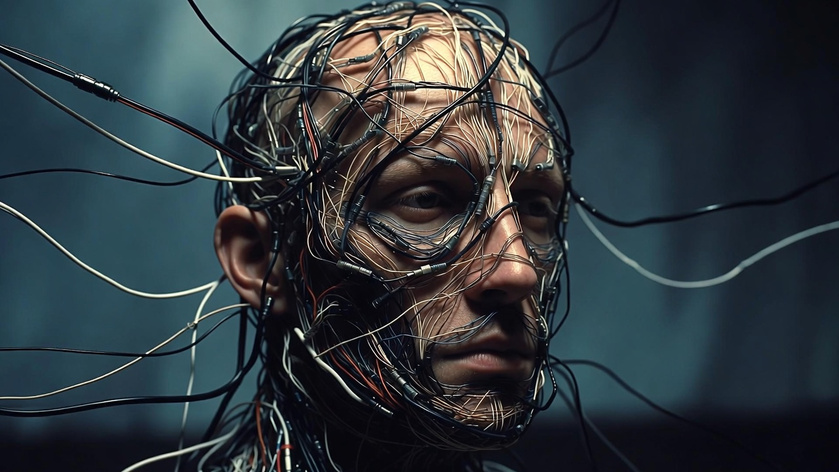
Pain is always real, but it isn’t always a perfect snapshot of what’s happening in your tissues. It’s more like your nervous system’s best guess about whether you’re safe or in danger.

Most of us are taught to think of pain like a fuel gauge: more pain equals more damage, less pain equals less damage.

But that’s not how the body actually works.

You can have a big injury with surprisingly little pain, like someone finishing a race on a broken foot. You can also have a lot of pain with very little ongoing damage, like chronic back pain years after an old injury, headaches, or irritable bowel symptoms.

Pain is better understood as an alarm system. Sometimes the alarm is spot-on. Sometimes it’s too sensitive. Sometimes it’s going off because of old wiring and past experiences, not just what’s happening right now in the tissues.


The standing-on-nails example

You may have seen those videos of people calmly standing on a board full of nails. It looks impossible at first. Shouldn’t that be pure agony?

Here’s the interesting part:

  • The nails are real.

  • There are enough nails that the weight spreads out, so there isn’t one single nail drilling into a tiny point.

  • And the person is usually calm, focused, and trusting the process.

If pain were only about “sharp object equals damage,” no one could do this. Yet people stand there, breathe, and sometimes even smile.

What changed?

Not the nails.

What changed is the nervous system’s interpretation of what those sensations mean.

If the same person were terrified, convinced they were about to be injured, and unable to relax, those same sensations could spike into intense pain. Same nails, different state. Same input, different story.


Your body sends signals, your brain decides

In simple language, here’s what happens in all of us:

  • Your body sends signals up to your brain: pressure, stretch, heat, cold, inflammation, chemical changes.

  • Your brain receives those signals and asks: “Is this dangerous?”

  • Then it makes a call: turn up pain, turn down pain, or no pain at all.

That decision is influenced by:

  • What’s going on in your tissues.

  • Your past injuries and memories.

  • Your stress level, sleep, and mood.

  • Your beliefs (“my back is fragile,” “this movement always hurts me”).

So pain is not imagined, but it is interpreted. It’s your brain’s way of saying, “For where you are and what you’ve been through, I think you might be in danger right now.”


When the volume knob gets stuck on high

In many chronic pain situations, the problem isn’t that your body is constantly breaking down. The problem is that the alarm system has become overprotective.

Over time, your nervous system can learn to:

  • React faster.

  • React to smaller triggers.

  • Stay “on guard” even when tissues have healed.

Think of it like living in a house that’s been broken into before. Every little sound at night can feel like a threat.

Your nervous system can do the same thing with pain.

This is why:

  • Your scans can look “normal,” yet you still hurt.

  • A light touch or simple movement can feel intense.

  • The pain can spread or move around, instead of staying in one small spot.

The pain is still real. It’s just no longer a simple readout of tissue damage. It’s a sign that the system is wound up.


When emotion lets go and pain quiets down

There’s another layer most people don’t talk about: emotion.

Your nervous system doesn’t just track physical load. It also carries emotional load. Fear, shame, grief, anger, and old shock all add weight to the system.

This is why you sometimes see someone standing on nails, shaking and bracing at first… then they breathe, soften, maybe even laugh or cry, and suddenly it looks easy.

Or in real life:

  • A person lying on a table, guarding an area for years.

  • They finally let themselves feel something they’ve been holding back.

  • The pain that felt unbearable a moment ago suddenly drops way down.

It’s not that their tissues magically regenerated in thirty seconds. What changed was the inner threat level.

Their system stopped bracing so hard against the emotional weight it was carrying. Once that load dropped, the brain no longer needed to keep the pain alarm so loud.

Pain was real before. The shift is real too.


“It’s not all in your head”

When we say pain involves the brain, people sometimes hear, “So you’re saying it’s all in my head?”

No.

It means:

  • Your brain and spinal cord are part of your body.

  • They can become more sensitive, just like muscles can get tight or tissues can get inflamed.

  • That sensitivity can show up as pain, even when a scan doesn’t find a fresh tear or fracture.

So when we help the nervous system calm down, we’re not dismissing your pain. We’re treating one of the main sources of it.


What this means for healing

If pain was only about damage, the only answers would be pills, shots, surgery, or “wait it out.”

But if pain is your system’s interpretation, we have more doors we can open:

  • Gentle movement to give your brain safe, new input.

  • Breathing and relaxation practices to tell the system, “You’re safer than you feel right now.”

  • Hands-on work that changes how your body is felt from the inside.

  • Emotional work and honest conversations that lower the background threat level.

  • Education that reassures you your body is not permanently broken.

None of these are magic tricks. But together, they can help lower the volume on the alarm and let your system trust itself again.


A new way to talk to your pain

If you’re in pain right now, try shifting the question from:

“What’s broken in me?”

to:

“What is my system trying to protect me from, and how can I show it I’m safer than it thinks?”

You’re not weak for feeling pain. You’re not making it up. But you’re also not stuck with the old story that pain always means something is destroyed.

Your body is adaptable. Your nervous system is trainable. And pain, as intense and overwhelming as it can be, is a conversation we can start to change.


If this way of looking at pain resonates with you, you’ll probably love the conversations we’re having on my podcast and inside my work with DeFT Technique.

You can:

  • Join my email list for more nervous-system-based perspectives on healing.

  • If you’re a chiropractor or bodyworker, explore DeFT to learn a more listening-based approach to working with the body and nervous system.
 
 
Read full Article
post photo preview
How Adjustments Rewire the Brain
How Chiropractic Care Tunes Your Neural Wiring for Better Focus, Mood, and Healing

Most people think chiropractors “move bones.” But the real story lives in the brain.

Your brain runs on maps — dynamic, living representations of your body’s position, tension, and safety at any given moment. These maps live in areas like the cerebellum, prefrontal cortex, and sensory cortex. They tell your brain, “Here’s where you are, how you feel, and what to do next.”

The problem?
Life, stress, and trauma distort those maps. Old injuries, chronic tension, even prolonged emotional strain can cause the brain to hold onto outdated information — like it’s running old software that no longer matches your current hardware.

That’s where the adjustment comes in.

A chiropractic adjustment is a precise sensory input that wakes up the brain’s awareness of a part of the body that’s gone “offline.”

Heidi Haavik, a leading chiropractic neuroscientist, has shown through EEG and fMRI research that adjustments actually change the way the brain processes information. After an adjustment, the brain communicates more efficiently between regions responsible for movement control, balance, and self-regulation. In plain language:

The brain literally updates its body map.

Think of it like pressing “refresh” on a glitchy operating system. The new input helps the nervous system release tension, improve coordination, and restore optimal tone throughout the body.

So yes — bones move. But what’s really happening is that the brain reorganizes. And when the brain communicates better, the body follows.

That’s not magic. That’s innate intelligence — your body using new information to heal.

Interesting, isnt it? Now go get adjusted!

Live Long and Prosper,

-Dan

Read full Article
Dan Versus The Flotation Tank
How to Discover Your Deepest Fears While Doing Absolutely Nothing


Ihad been wanting to try out a flotation tank. Those tanks where you are in isolation for an hour to an hour and a half. The first time I heard about this was way back in the 80’s with the movie “Altered States”.

Now some 30+ years later, a flotation center opened in my city. A friend of mine decided that she was going to surprise me with a session.

The center was located in a very nice building close to the offices of a hoity-toity plastic surgery center.

The attendant showed us the facility and explained everything. He asked if I was claustrophobic. The big macho guy that lives in me said no way, so the attendant led me to my room.

He instructed me to undress, shower and get in the flotation capsule when I was ready. He made sure I understood the procedure and left.

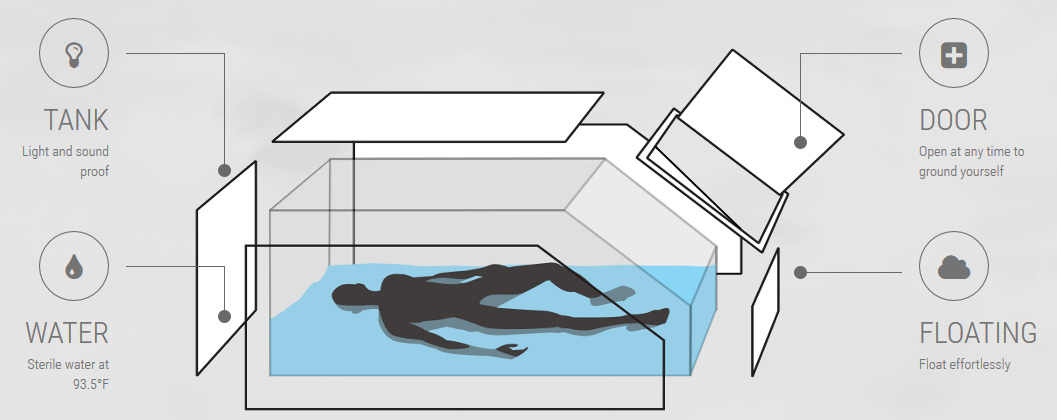
I got in the tank and found the water was neither warm nor hot, I’m supposing it was perfectly tuned at 98.6 or somewhere in that vicinity.

Flotation in a soundproof capsule with enough salt to make you buoyant. Once you start floating, it’s like you’re in the Dead Sea or the Great Salt Lake. You don’t sink.

I got in the pod and closed the door.

Now I started to relax. I never thought that I was claustrophobic or anything, but I noticed myself getting edgy and nervous about the pod being closed up.

As I floated close to the door of the pod, I felt my breath.

I started wondering “what if this thing is airtight?” “What if there is no oxygen in here and they find a pruned up, salty corpse in here?” Not because I drowned but because I ran out of oxygen and suffocated in this airtight coffin.

I got more and more uncomfortable until I decided I must open the door- I would still lay in the flotation tank, but I would be able to breathe.

Since it was so dark, it was difficult to find somewhere to hold on so I didn’t slip while opening the door. While executing my escape, my wet salty hand touched my eyes and they started stinging from all the salt.

They were stinging bad. “What if the salt they used had something else that was toxic to my eyes?”

Oh no! Now I have to leave the pod to wipe my eyes and face! I don’t want to go blind!”

After several clumsy attempts, I was out I wiped my face and eyes and went back in-WITH THE DOOR OPEN.

I tried relaxing, but realized the room was colder than my pod and I was not as comfortable as I should be in order to be able to relax.

I CLOSED THE DOOR AGAIN.

“Ok.-you can do this! Relax.”

As I started to relax, I noticed one thing….pain.

Pain in my neck, pain in my shoulders. I realized I was holding tension there and I should let go of those places if I wanted the pain to go away.

I kept trying, -a little let go but the pain was getting worse.

This is when I became aware of all the stress and tension I was holding on to.

Around this time I start hearing my body.

I can hear my heart. I can almost hear the blood flowing through me and I notice I can hear my joints moving. It’s a weird feeling, since it feels like my even my muscles make noise as they work.

I realize that there is a low-grade buzzing and determine it is somehow related to my stressed mental state.

I have done meditiations where as you relax, you try to be in a state of feeling intense love and radiating love and so on.

I felt that if I did that, maybe I would relax a bit and hurt a bit less. So I got into my mental state: I radiated love, I accepted love, I was love.

The buzzing changed. I got louder and throatier-like a jet engine before landing.

“was that what the yogis are talking about when they talk about the “om”?

But this sound was nothing like any “om” I’d heard. It was louder and much deeper.

As I played around with these discoveries I finally stopped hurting and was able to relax.

And I really did relax….into a dream. I guess I fell asleep. And I what seemed like 5 minutes, the chime telling me my time was up started playing.

Will I do it again? Definitely.

I think next time I will be more prepared and know what to expect

Live long and prosper

-Dan

Share

 
Looking at this image, I realize maybe the reason I fekt the breath on my face was because I was turned in the opposite direction. Maybe if I had done it correctly I would have had a totally different experience.

Thanks for reading The Intuitive Chiropractor! This post is public so feel free to share it.

Read full Article
See More
Available on mobile and TV devices
google store google store app store app store
google store google store app tv store app tv store amazon store amazon store roku store roku store
Powered by Locals